
Gig work should be predictable and flexible at the same time, and Amazon Flex gives you fixed-pay delivery blocks that fit your schedule.
The app shows each block’s duration and guaranteed payout before acceptance, pay adjusts for delivery type and local demand, availability changes by market, and finishing early still pays the full offered amount.
How Amazon Flex Works
Amazon Flex lets independent contractors deliver packages using their own vehicles and schedules. Delivery time is organized into “blocks,” typically 3–8 hours, and the app shows the guaranteed payout and estimated duration before acceptance.
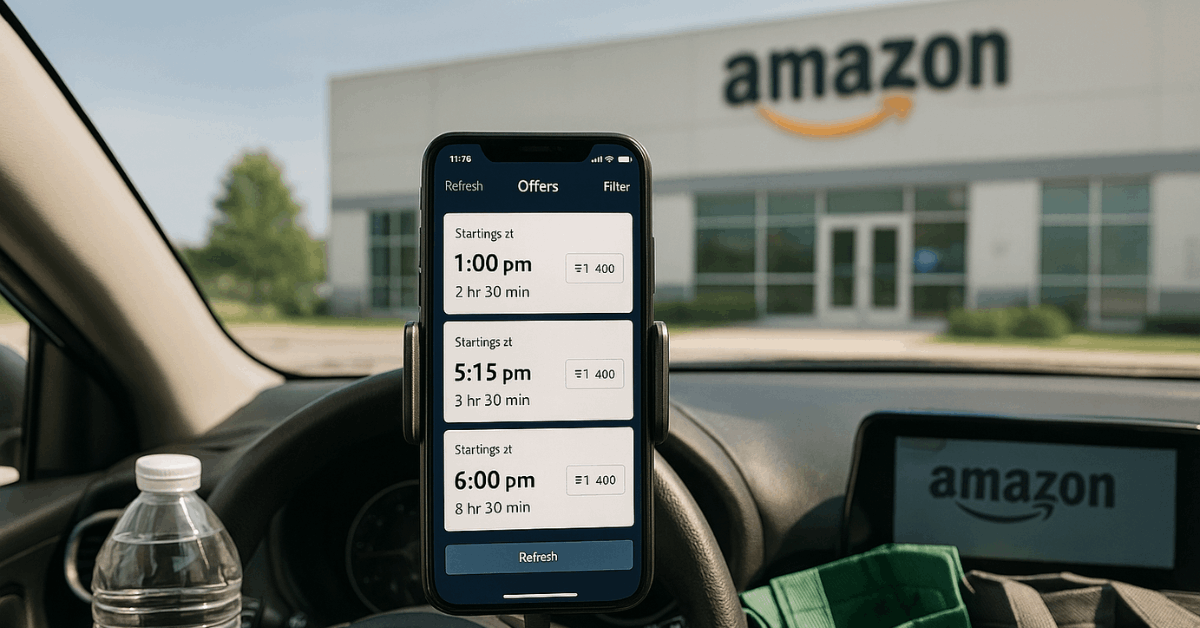
Earnings reflect the estimated time to complete the block, local demand, delivery type, and any tips added by customers.
Blocks can appear seven days a week, although availability fluctuates and is not guaranteed. Completing a block early still pays the full offered amount. The Offers page lists open blocks and payouts in real time.
Amazon Flex Earnings
Quick facts help benchmark pay and payment timing before committing to a route.
| Item | Summary |
| Block duration | Usually 3–8 hours per block. |
| Typical pay | Commonly about $18–$25 per hour, higher during peaks. |
| Example offer | Around $118 for a four-hour block; full amount paid even if finished early. |
| Payment schedule | Many regions deposit weekly on Wednesday for the prior seven days; some markets pay twice weekly; bank processing can add a short delay. |
| Tips & promos | Drivers keep 100% of tips; limited-time “Challenges” add bonuses. |
What You Deliver
Finding the right block often depends on category and effort level; confirm options in your area.
- Amazon.com parcel routes using the Amazon delivery app.
- Prime Now and Amazon Fresh orders that may include groceries.
- Store orders from local retailers picked up and delivered.
- Return pickups or special-service requests when offered.
How Pay Is Calculated
Guaranteed, upfront earnings form the base of each offer, allowing informed scheduling before driving to a station.
Amazon Flex sets the amount using the estimated time to complete the route and regional conditions, then adds any customer tips on eligible orders. During periods of heavy demand such as holidays, minimum earnings may rise, which can lift available offers.
An earnings range may appear on tip-eligible blocks, reflecting guaranteed pay plus estimated tips based on recent blocks in the same region.
Factors That Change Your Pay
Busy cities and peak seasons surface more blocks and can push offers higher, while quieter areas see fewer blocks and more modest payouts. Grocery and Prime Now blocks often require tighter timing and more walking or carrying, which can be balanced by stronger offers compared to standard parcels.
Finishing efficiently does not reduce pay on a fixed block, yet saved time can be used to grab another block or run work on other platforms if that suits your schedule.
Fuel, maintenance, insurance, tires, tolls, and parking reduce take-home income, so tracking real costs is essential for an accurate hourly figure.
Tracking Payments and Updating Bank Details
Payment visibility sits in the Earnings screen, which shows current balance, pending payments, and the scheduled deposit date.
Past blocks include the block date, duration, payout, and bank deposit date for quick reconciliation. Bank details can be updated at any time through:
- Main menu →
- Settings →
- Personal Information →
- Bank Account →
- Direct Deposit →
- Edit.
Promotions, Tips, and Rewards
Promotions appear as limited-time Challenges that award extra cash after completing a specified number of blocks within set dates. All customer tips go to the driver, without reductions, and estimated tips shown before acceptance come from recent results for similar blocks in the same area.
Rewards unlock program perks as you complete deliveries; Level 2 includes Preferred Scheduling, which lets you set a preferred station, day, and time.
Rewards also aggregates common savings such as fuel discounts and tools for insurance and taxes. The Rewards tab lists available benefits in your market.
Practical Ways to Boost Income
To maximize you income, follow these easy but practical ways:
Optimize Offer Sniping
Enable push notifications and keep the Offers screen active during high-demand windows to catch surge-priced or high-pay blocks the moment they appear. Maintain strong LTE or Wi-Fi and reduce app switching, since even a few seconds of delay causes missed opportunities.
Park near common pickup sites and pre-stage navigation so that acceptance converts into motion without lag. Refresh at a steady cadence instead of constantly, because rapid repeated refreshes can trigger temporary lockouts in some markets.
Set clear floors for acceptable pay and avoid chasing every alert, which helps you conserve time and fuel while still increasing average earnings.
Master Local Logistics
Collect apartment access codes, gate procedures, and concierge rules in a personal note so repeat stops move faster each week. Save building entrances, loading zones, and permitted short-term parking spots in your maps app to minimize circling and ticket risk.
Study frequent choke points and school zones on your routes to time arrivals outside peak congestion. Stage loads in trunk order that matches delivery sequence to cut door-open time at every stop.
Carry a compact cart and an insulated bag for fragile or cold items to reduce trips back to the vehicle and avoid returns. Confirm unit numbers and delivery notes before leaving the lot to prevent reattempts that drain both time and pay.
Target Peak Windows
Build a weekly routine around evenings, weekends, and holiday periods, since those windows commonly surface more blocks and stronger rates. Watch local patterns such as payday Fridays, severe weather days, and big televised events that drive spikes in same-day orders.
Arrive near stations fifteen to thirty minutes before typical release times so early batches land while the app is open. Stack a short block before a longer one when possible to lock in guaranteed pay while leaving room for a premium add-on.
Keep a backup platform active during soft hours so gaps can be filled without sitting idle in a low-offer zone. Track hourly results by day of week and export totals monthly to refine which windows actually deliver the best net rate in your city.
Track Mileage and Expenses
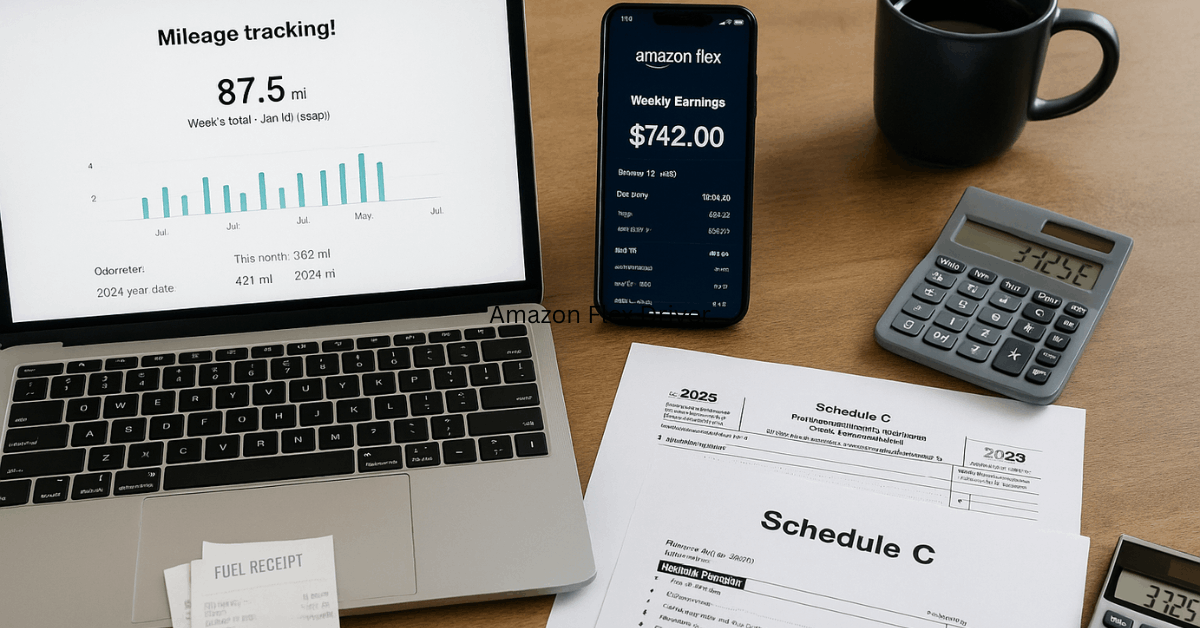
Run a mileage app such as Everlance or a similar tool every time the engine starts so business miles get captured automatically. Log fuel, maintenance, tires, car washes, tolls, parking, and phone costs, then tag each line as business or personal to support accurate deductions.
Compare the IRS standard mileage method against actual expenses during the first months to determine which approach yields the larger deduction.
Recalculate your true hourly rate after subtracting fuel, depreciation, and insurance so schedule choices reflect take-home pay, not gross offers. Set calendar reminders for quarterly tax deadlines and keep a separate account for estimated payments to avoid penalties and cash-flow stress.
Taxes and Deductible Expenses
Independent contractors generally file business income and pay self-employment tax, so disciplined records matter throughout the year rather than only at filing time.
Typical deductions include standard mileage (or actual vehicle expenses if that yields a larger deduction), phone service attributable to work, a portion of auto insurance, tolls and parking, and basic delivery gear such as insulated bags and phone mounts.
A choice must be made between the IRS standard mileage rate and the actual-expense method for the vehicle deduction; parallel tracking early on helps reveal which method saves more in your situation.
Conclusion: Is It Worth It?
Flexible scheduling, guaranteed block payouts, and full ownership of tips make Amazon Flex a practical side income for many drivers who plan around peak times and manage costs.
Solid results depend on market demand and disciplined expense tracking, so building a routine that targets high-pay windows while controlling vehicle costs typically delivers the most reliable take-home pay.